
Imagine a young man from a village who suffers a burn injury in a kitchen accident. The wound heals, but months later the scar tightens around his elbow and he cannot straighten his arm. Or think of a mother who has just been told that her newborn has a cleft lip, and who has no idea where to turn next reshape. It has nothing to do with the material. Plastic surgery is a broad specialty. It includes reconstructive surgery, which restores form and function after injury, disease or birth differences. It also includes aesthetic (cosmetic) surgery, which focuses on appearance. plastic surgeon in Cuttack, Odisha, may therefore see a burn patient, a road accident survivor, a child with a congenital difference or an adult with a long-standing scar, all in the same week.
What Does a Plastic Surgeon Treat?
A plastic surgeon works on the body's outer structures and the tissues beneath them. Depending on their training and clinical practice, this may include:
Skin and soft tissue
The face, including the nose, eyelids, ears and jaw region
The hands and upper limbs
The breasts
Body contour, including the abdomen, arms and thighs
Scars, wounds and burn-affected areas
Not every plastic surgeon performs every procedure. Some focus more on reconstruction, some on aesthetic work, and some develop a special interest in areas like hand surgery or craniofacial conditions. It is always reasonable to ask what a surgeon regularly treats.
Conditions a Plastic Surgeon Can Treat
The list below covers conditions commonly managed within plastic and reconstructive surgery. Whether a particular treatment is right for you depends on a proper examination.
1. Burn Injuries and Burn Scars
Burns range from minor to life-threatening. After the initial emergency treatment, plastic surgeons often help with wound closure, skin grafting (moving healthy skin to cover a wound) and later scar management.
2. Accident and Trauma-Related Injuries
Road accidents, falls, workplace injuries and machine injuries can damage skin, muscle, bone and nerves together. Plastic surgeons help rebuild damaged tissue, cover exposed structures and restore function where possible. They often work alongside orthopaedic surgeons, emergency physicians and other specialists.
3. Facial Injuries and Soft-Tissue Damage
The face carries both function and identity, so injuries here need careful attention. Cuts, lacerations, dog bites and injuries to the eyelids, lips, nose or ears may need precise repair to protect function and reduce visible scarring. Prompt evaluation matters, though the exact timing depends on the injury.
4. Complex Wounds and Soft-Tissue Defects
Some wounds do not heal with simple dressings. Examples include pressure sores, diabetic foot wounds, wounds after infection and wounds with exposed bone or tendon. A plastic surgeon may recommend debridement (removing unhealthy tissue), skin grafts or flap surgery, where healthy tissue with its own blood supply is moved to cover the defect.
5. Scar Revision
Scars are part of natural healing, but some become wide, raised, itchy or restrictive. Scar revision aims to improve a scar's appearance or function. Options may include topical treatments, injections, silicone-based products, surgical revision or other techniques.
Scars cannot be erased completely, and results vary from person to person.
6. Skin and Soft-Tissue Defects
Defects can result from injury, infection, tumour removal or previous surgery. Small ones may be closed directly, while larger ones may need grafts or local flaps. The goal is to restore coverage and, where possible, natural contour and function.
7. Hand Injuries and Reconstruction
Our hands are used constantly, so even a small injury can affect daily life and work. Plastic surgeons with an interest in hand surgery may treat cuts to tendons, fingertip injuries, crush injuries and contractures caused by burns or scars. Early assessment usually helps in planning treatment.
8. Congenital Deformities
Some conditions are present from birth. These may include differences in the hands (such as webbed or extra fingers), the ears, the face or the chest wall. Timing of surgery depends on the condition, the child's age and overall health, and this is best discussed with the treating team.
9. Cleft Lip and Cleft Palate
A cleft lip or cleft palate occurs when the lip or the roof of the mouth does not fully join during pregnancy. It can affect feeding, speech, hearing and appearance. Care is usually multidisciplinary, involving plastic surgeons, pediatricians, ENT specialists, dental specialists and speech therapists. Surgery is commonly planned in stages during infancy and childhood.
10. Facial Deformities
Facial differences may be congenital, or they may follow trauma or disease. Some patients have concerns about jaw position, facial asymmetry or nasal deformity that affect breathing, chewing or confidence. A plastic surgeon may assess these, sometimes together with maxillofacial or ENT colleagues.
11. Breast Reconstruction
Some women need a mastectomy (removal of the breast) for breast cancer or other reasons. Breast reconstruction rebuilds the breast shape using implants, the patient's own tissue, or a combination. It may be done at the time of mastectomy or later, and the choice depends on the cancer treatment plan, body type and personal preference. Not every patient is a candidate for every method.
12. Breast Asymmetry and Selected Breast Procedures
Many women have some natural difference between their breasts. When asymmetry is marked or causes physical or emotional distress, a plastic surgeon may discuss options. Some breast procedures may be appropriate for specific medical or reconstructive reasons, and a consultation helps clarify which, if any, suit you.
When Should You See a Plastic Surgeon?
You do not need to wait until a problem becomes severe. Consider seeking a consultation if:
You have had a serious injury or burn. Early evaluation can help guide wound care and reduce complications.
A wound is not healing. Wounds that remain open for weeks, keep breaking down or show signs of infection need assessment.
A scar restricts movement or troubles you significantly. Tight, painful or very noticeable scars may be treatable.
You need reconstruction after cancer surgery. Ideally, this is discussed early with your cancer team.
A child or adult has a congenital difference. Early guidance helps families plan.
You have a selected cosmetic concern. A consultation can help you understand what is realistic.
Another doctor has advised plastic surgery evaluation. Your physician or surgeon may recommend this for good reason.
In an emergency, such as a severe burn, heavy bleeding or a major accident, go to the nearest hospital emergency department first.
What Happens During a Plastic Surgery Consultation?
Many patients feel nervous before a first visit, so it helps to know what to expect. A typical consultation may include:
Medical history: your past illnesses, medications, allergies, previous surgeries and habits such as smoking, which can affect healing.
Physical examination: a careful look at the affected area, and sometimes photographs for your medical record.
Understanding your concern: what bothers you most, and what you hope to achieve.
Treatment options: surgical and non-surgical choices, explained in plain language.
Expected recovery: the likely healing period and how it may affect work and daily life.
Risks and possible complications: such as infection, bleeding, scarring or the need for further procedures.
Alternatives: including the option of waiting or choosing not to operate.
Follow-up requirements: dressings, check-ups, physiotherapy or scar care.
Recommendations always depend on individual assessment. Please be wary of anyone who offers a fixed plan or promises a result before examining you.
Frequently Asked Questions About Plastic Surgery Treatment
1. What does a plastic surgeon treat?
Ans :- A plastic surgeon may treat burns, injuries, wounds, scars, congenital conditions, hand and facial problems, and breast concerns, and may also perform cosmetic procedures. The exact range depends on the surgeon's training and practice.
2. Is plastic surgery only for cosmetic purposes?
Ans :- No. A large part of plastic surgery is reconstructive, helping restore function and appearance after injury, disease or birth differences.
3. When should I see a plastic surgeon after an injury?
Ans :- Get emergency care first. Once you are stable, a plastic surgeon can be consulted soon after an injury involving the face, hands, deep wounds or burns, since early planning can matter. Your treating doctor can advise on timing.
4. Can a plastic surgeon treat burn scars?
Ans :- Yes, plastic surgeons commonly manage burn scars, especially those that are tight, thick or restrict movement. Options depend on the scar's age, size and location, and improvement varies from person to person.
5. Can plastic surgeons treat accident-related facial injuries?
Ans :- Yes. They repair soft-tissue injuries of the face and may work with ENT, dental or orthopedic colleagues if bones are involved.
6. Can plastic surgery help with old scars?
Ans :- Often, scars can be improved even years later, although they cannot be removed completely. A consultation will show what may be possible for your scar.
7. What is the difference between cosmetic and reconstructive surgery?
Ans :- Reconstructive surgery restores function, structure or appearance after injury, disease or congenital conditions. Cosmetic surgery generally aims to enhance appearance in healthy tissue.
8. How do I choose a plastic surgeon in Cuttack?
Ans :- Check qualifications and registration, ask about experience with your specific condition, and confirm what facilities and follow-up care are available. Choose someone who explains risks and costs openly.
9. Is plastic surgery suitable for everyone?
Ans :- No. Suitability depends on your general health, the condition being treated, your expectations and other factors. Some people are advised to wait, or to choose non-surgical options.
10. How long does recovery take after plastic surgery?
Ans :- It varies widely. Minor procedures may need a few days, while major reconstruction can take weeks to months. Your surgeon can give you a realistic estimate after assessing your case.
Conclusion
Every patient's situation is different, and so are the risks, recovery time and likely outcomes. Please avoid self-diagnosing or relying on online advice alone. If a condition or concern is affecting your health, function or confidence, consulting a Plastic Surgeon in Cuttack for a proper evaluation is the best first step towards an honest, personalised plan.
Living With a Scar, Wound or Deformity That Still Troubles You? Get a Professional Consultation
Living with a scar, wound or deformity that still troubles you? You don’t have to accept discomfort, restricted movement or lost confidence as permanent. A Plastic Surgeon in Cuttack can assess burns, accident injuries, non-healing wounds and congenital differences, then discuss realistic options. Get a professional consultation for an honest, personalised plan safely, privately and without guesswork.
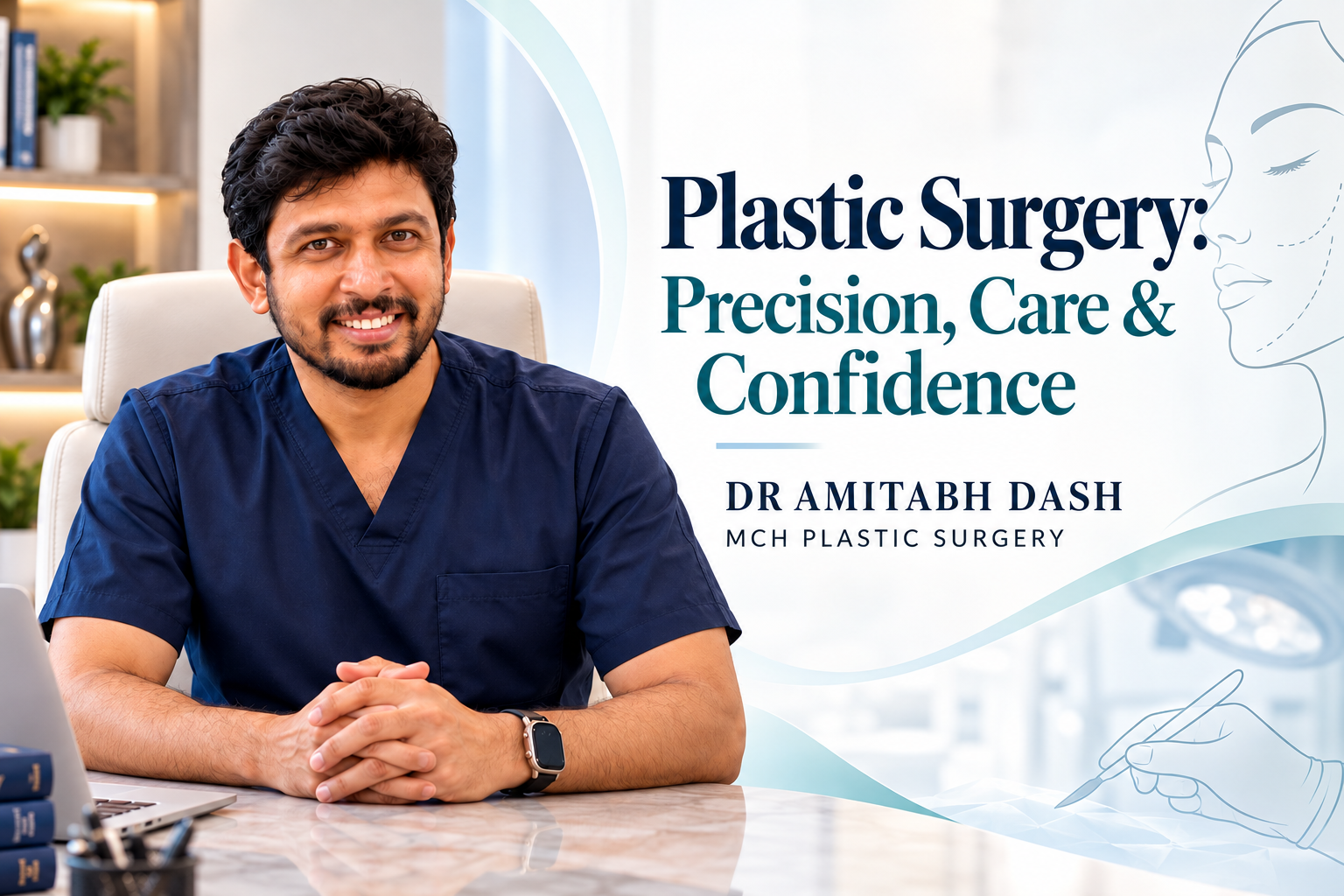
Dr Amitabh Dash | Consultant Plastic Surgeon
Address :- Kunja Vihar Lane ,Arunodaya Market, Link Road Cuttack, Odisha, Pin:- 753012.
Book an appointment today and get a professional consultation for plastic surgeon treatment
.