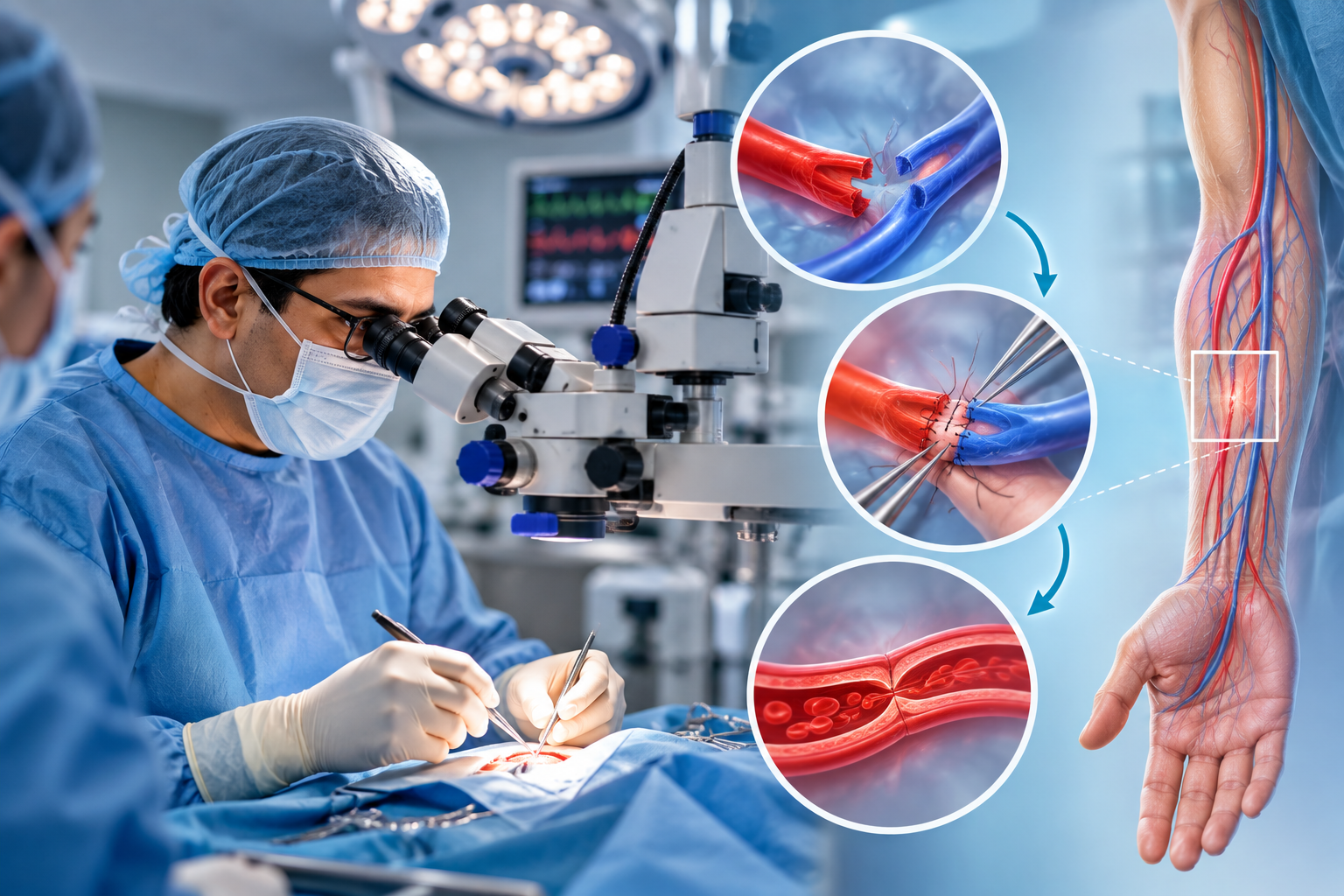
Imagine a complex network of highways and local roads, all working together to keep a city alive. Your body has a similar network an intricate web of blood vessels that carry oxygen and nutrients to every tissue, from the skin on your fingertips to the muscles in your legs. When a serious injury or a major surgery disrupts this network, the consequences can be severe. Tissues can be starved of blood, wounds may fail to heal, and functions we take for granted can be lost. This is where microvascular surgery comes in. It is a highly specialized field of reconstructive surgery that allows a microvascular surgeon in Cuttack to repair or reconnect incredibly small blood vessels some thinner than a strand of hair to restore blood supply and help rebuild damaged body parts.
What Is Microvascular Surgery?
Microvascular surgery, often just called microsurgery, is a surgical discipline that combines high-powered magnification with specialized precision instruments to operate on very small structures. The term "microvascular" refers to the tiny blood vessels arteries and veins, usually less than 2-3 millimetres in diameter that are the focus of this technique. Unlike conventional surgery, where a surgeon works with what the naked eye can see, microvascular surgeons use an operating microscope that magnifies the surgical field from 4 to 40 times its normal size. This extreme magnification, along with instruments like forceps and scissors that are finer than a needle, allows the surgeon to handle tissues with extraordinary precision.
How Does Microvascular Surgery Work?
Microvascular surgery is a carefully planned process, and the steps can vary significantly based on the patient's specific injury or condition. Here is a general overview of how it works:
Assessment of Damage: The surgeon first evaluates the extent of the injury. This involves checking the condition of the skin, muscle, and bone, and critically, assessing which blood vessels are damaged and whether the surrounding tissue still has an adequate blood supply.
Identifying Suitable Vessels: The surgeon identifies healthy arteries and veins near the area that need reconstruction. These will serve as the new blood supply for the tissue that will be transferred or repaired.
Preparing the Tissue: If tissue needs to be transferred from another part of the body (a "flap"), it is carefully dissected along with its own blood vessels, which form a "pedicle."
Microsurgical Connection: This is the core of the procedure. Using the operating microscope, the surgeon connects the tiny arteries and veins of the transferred tissue to the blood vessels at the reconstruction site. This is done using sutures that are much finer than a human hair.
Monitoring: After surgery, the reconstructed tissue is closely monitored. Medical staff regularly check the colour, temperature, and blood flow of the area to ensure the new connections remain open and healthy.
What Types of Damage Can Microvascular Surgery Help Address?
Microvascular surgery is not a treatment for every condition, but it can be a powerful option for a specific set of complex problems. Suitability is always determined through an individual clinical assessment.
Severe Traumatic Injuries
Accidents involving high-impact forces can cause devastating damage, crushing or tearing skin, muscle, blood vessels, nerves, and bone. In these cases, microsurgery can help reconstruct the area by restoring blood supply and providing healthy tissue coverage.
Tissue Loss After Accidents
When a significant amount of tissue is lost—whether from a road accident, industrial injury, or other trauma—there may not be enough local tissue to close the wound. Microvascular techniques allow surgeons to transfer healthy tissue from another part of the body to fill the defect.
Complex Hand Injuries
The hand is a remarkably intricate structure. Severe cuts, crush injuries, and other trauma can damage multiple critical components simultaneously, including vessels, nerves, tendons, and soft tissue. Microsurgical reconstruction plays a vital role in salvaging these complex structures and maximizing the potential for functional recovery.
Soft-Tissue Defects
Certain wounds, particularly those over vital structures like bones, joints, or major vessels, require healthy, well-vascularized tissue to cover and protect them. Microvascular surgery can provide this coverage.
Certain Burns and Post-Burn Reconstruction
Deep burns can destroy the blood supply to the skin. In the initial phase, this requires emergency management. Later, for reconstruction of post-burn contractures and deformities, microsurgical techniques involving tissue transfer may sometimes be considered.
Reconstruction After Tumor or Cancer Surgery
When a tumour is removed from areas like the head, neck, or breast, it can leave a significant defect. Microvascular free flap surgery is often a key part of reconstructing these areas, restoring form and function, and helping patients return to their daily lives.
Injuries Involving Blood Vessels and Surrounding Tissues
This is the fundamental application of microvascular surgery. When major arteries or veins are damaged, restoring their patency is critical for saving the limb or the tissue they supply.
Selected Cases Requiring Tissue Transfer
In situations where local tissues are inadequate, damaged, or have poor blood supply due to prior surgery or radiation, a microvascular free flap—transferring tissue from a distant donor site—may be the most effective reconstructive option.
Microvascular Surgery After a Road Accident
Road traffic accidents are a common cause of complex, multi-tissue injuries. A high-speed collision can result in fractures, crushed muscle, torn skin, and severed blood vessels and nerves. When a limb is severely injured, the priority is to save the limb and restore its blood supply as quickly as possible. In selected cases, microvascular surgery is used as part of a comprehensive trauma reconstruction plan. The surgeon may need to repair injured blood vessels to restore circulation to the foot or hand, and then use a free flap to provide durable skin and soft tissue coverage over exposed bones or vital structures.
Microvascular Surgery for Complex Hand Injuries
The hand is unique in its combination of strength, dexterity, and sensation. A complex hand injury can compromise these abilities in an instant. Microsurgical techniques are indispensable in managing severe hand trauma.
These injuries may include:
Severe Cuts that divide arteries, nerves, and tendons.
Crush Injuries that devitalise tissue and create complex, irregular wounds.
Tissue Loss from avulsion or amputation.
Complex Wounds that involve multiple structures.
For these injuries, microvascular surgeons can perform intricate repairs of small blood vessels to restore circulation and repair injured nerves to help restore sensation. The goal is not just to close the wound, but to preserve the viability of the hand and maximise its potential for function in the future.
What Is Free Flap Reconstruction?
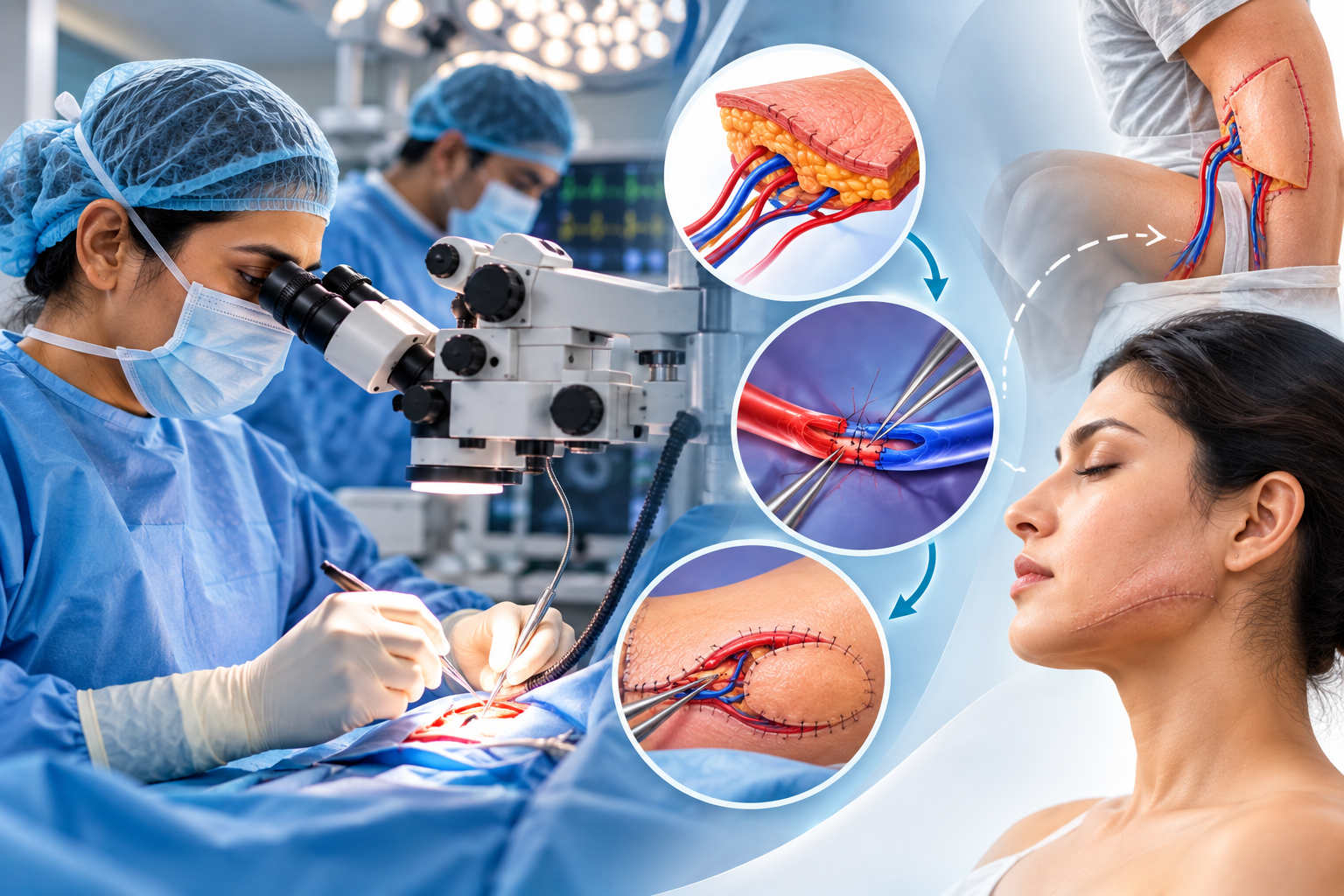
A free flap, also known as a microvascular free tissue transfer, is a procedure where a block of tissue (which can include skin, fat, muscle, and sometimes bone) is taken from one part of the body the donor site and moved to another part the recipient site to reconstruct a defect. What makes it a "free" flap is that the tissue is completely detached from its original blood supply. The tissue is kept alive during the transfer by its own blood vessels, called the pedicle. Free flap surgery is a major procedure and is not required for every patient. It is considered when simpler reconstructive options, such as skin grafts or local flaps, are not suitable because the defect is too large, too complex, or the surrounding tissue has a poor blood supply.
How Microvascular Surgery Helps Restore Blood Supply
The success of any tissue reconstruction depends on a robust and reliable blood supply. Microvascular surgery directly addresses this need by re-establishing two critical pathways:
The Arterial Inflow: Arteries bring oxygen-rich blood and vital nutrients to the tissues. The microsurgeon connects the artery in the transferred tissue to a healthy artery at the recipient site, ensuring the tissue receives the fuel it needs to survive.
The Venous Outflow: Veins drain deoxygenated blood and waste products away from the tissues. Equally important, the surgeon connects the vein in the flap to a healthy vein, preventing blood from becoming congested and causing the tissue to fail.
By meticulously connecting both arteries and veins, microvascular surgery creates a new, functional circulation for the reconstructed area, supporting the survival of the transferred tissue and promoting healing.
Microvascular Surgery and Nerve Reconstruction
Serious injuries often damage nerves along with blood vessels and soft tissue. While microvascular surgery focuses on blood vessels, the same microsurgical techniques and magnification are used for nerve repair. When a nerve is cut, the surgeon can suture the nerve endings back together under the microscope. This is a meticulous process, as nerves are made of tiny bundles of fibres. It is common for both vascular and nerve repairs to be performed during the same complex reconstruction procedure.
When May Microvascular Reconstruction Be Recommended?
A plastic and reconstructive surgeon will consider several clinical factors before recommending microvascular reconstruction. These include:
Amount of Tissue Loss: The size and volume of the defect.
Location and Size of the Defect: Defects over vital structures or in functionally critical areas may be more likely to require this approach.
Condition of Surrounding Tissue: Whether the local tissue is healthy enough to support a simpler repair.
Blood Supply: The adequacy of blood flow to the area.
Severity of Injury: The complexity and extent of damage to multiple tissue types.
Functional Requirements: The need to restore or preserve critical functions like grasping or walking.
Previous Surgeries: A history of prior operations, especially those involving radiation, can affect tissue quality and blood supply.
Overall Health: The patient's general medical condition and their ability to undergo a long, complex surgery.
Patient-Specific Goals: The patient's own priorities for reconstruction.
Benefits and Goals of Microvascular Reconstruction
The primary goals of microvascular reconstruction are practical and patient-focused. They may include:
Restoring Tissue Coverage: Providing healthy skin and soft tissue to close wounds and cover exposed structures.
Supporting Tissue Survival: Re-establishing a blood supply to keep tissues alive.
Protecting Exposed Structures: Shielding bones, tendons, nerves, and major blood vessels from infection and desiccation.
Improving or Preserving Function: Reconstructing anatomical structures to help restore movement and sensation.
Reconstructing Damaged Areas: Rebuilding the form of a body part after trauma or cancer removal.
Supporting Wound Healing: Creating an environment conducive to healing.
Improving Structural Appearance: While not primarily cosmetic, reconstruction can improve the appearance of a severely damaged area.
Outcomes vary from patient to patient, and reconstruction may require more than one procedure.
What Happens During a Microvascular Surgery Consultation?
If you are referred to a microvascular surgeon in Cuttack, your first appointment will be a detailed consultation. This typically involves:
Medical History: A discussion of your injury or condition, previous treatments, and your overall health.
Physical Examination: A thorough examination of the damaged area, including an assessment of circulation, sensation, and tissue quality.
Investigations: Imaging studies, such as CT scans, MRIs, or angiograms, may be requested if clinically indicated to get a clearer picture of the blood vessels and bone structure.
Discussion of Options: The surgeon will explain the reconstructive options available, which may include microvascular surgery or other techniques.
Risks and Benefits: A frank discussion of the potential risks and the realistic expected benefits of the procedure.
Recovery Expectations: An overview of the hospital stay, recovery process, and rehabilitation.
Follow-up Plan: A clear plan for post-operative monitoring and follow-up care.
Recovery After Microvascular Reconstruction
Recovery after microvascular surgery is a gradual process that varies greatly depending on the extent of the procedure and the patient's individual healing capacity. It is not possible to provide a rigid timeline, but here is a general overview:
Hospital Monitoring: After surgery, you will be in a specialized unit where the reconstructed tissue is closely monitored for several days to ensure healthy blood flow.
Swelling and Discomfort: Some swelling and discomfort are normal and are managed with medication.
Wound Care: You will receive specific instructions on how to care for your surgical site.
Activity Restrictions: You will need to avoid certain activities, such as lifting or strenuous use of the affected area, for a period to protect the surgical repair.
Follow-up Appointments: Regular visits with your surgeon are essential to monitor healing.
Rehabilitation: Physiotherapy or hand therapy is often a key part of recovery to help restore strength, movement, and function.
Gradual Recovery: The return of function and sensation is a slow process that requires patience and consistent rehabilitation.
Scar Maturation: Surgical scars will mature and fade over many months, but they will not disappear completely.
Potential Risks and Limitations
All surgeries carry risks, and it is important to be aware of them. For microvascular reconstruction, these can include:
Infection
Bleeding or Haematoma (a collection of blood)
Wound-Healing Problems
Scarring
Changes in Sensation at the donor or recipient site
Blood Vessel Complications, such as a blockage (thrombosis) that can compromise the flap
Tissue Loss, which may require additional surgery
Functional Limitations that may persist despite reconstruction, depending on the original injury
Your surgeon will discuss these risks with you in detail during your consultation.
When Should You See a Plastic and Reconstructive Surgeon?
You may benefit from a consultation with a plastic and reconstructive surgeon if you have:
A severe hand injury
Significant tissue loss from any cause
A complex wound that is not healing
Major facial or limb trauma
An injury involving blood vessels
A difficult-to-heal soft-tissue defect
A need for reconstruction following tumour removal
Complex scars or an unsatisfactory result from previous reconstruction
Important: If you have a severe, acute injury, do not wait for an appointment. Go to the nearest emergency department immediately. Emergency care is the first priority.
Microvascular Surgery in Cuttack
For patients in Cuttack and the surrounding regions of Odisha, access to advanced reconstructive care is essential. Complex injuries and conditions requiring microvascular reconstruction need the expertise of a qualified plastic and reconstructive surgeon. Dr. Amitabh Dash, with his MCh in Plastic Surgery and specialisation in Plastic, Reconstructive, Microvascular & Hand Surgery, provides evaluation and care for patients seeking microvascular reconstruction in Cuttack. An individualized clinical assessment is the most important step to determine if a microsurgical approach is appropriate for your specific situation.
Frequently Asked Question About Microvascular Surgery
Q1. What is microvascular surgery?
Ans :- Microvascular surgery is a specialised technique where surgeons use a high-powered microscope to operate on very small blood vessels and nerves, often less than 2-3 mm in diameter.
Q2. Why are blood vessels important in reconstructive surgery?
Ans :- Blood vessels are the lifeline of all tissues, delivering oxygen and nutrients and removing waste products. In reconstructive surgery, ensuring a healthy blood supply to the reconstructed or transferred tissue is critical for its survival and for proper wound healing.
Q3. When is microvascular surgery recommended?
It may be considered for complex injuries with significant tissue loss, severe hand trauma, reconstruction after cancer removal, or when simpler techniques are not enough to provide healthy, well-vascularized tissue coverage.
Q4. Can microvascular surgery treat severe hand injuries?
Ans :- Yes, microsurgical techniques are often indispensable for severe hand injuries. They allow surgeons to repair divided arteries to restore circulation and repair nerves to help restore sensation, maximizing the chances of salvaging the hand and preserving its function.
Q5. What is free flap surgery?
Ans :- A free flap is a procedure where a block of tissue (skin, muscle, bone) is moved from one part of the body to another to reconstruct a defect. The tissue's blood vessels are completely detached and then reconnected to vessels at the new site using microsurgery to restore blood flow.
Q6. Is microvascular surgery used after road accidents?
Ans :- Yes, in selected cases. Major road accidents can cause complex injuries with tissue loss and damaged blood vessels. Microvascular surgery can be used to restore blood supply to a limb and to transfer healthy tissue to cover large wounds, as part of a limb-salvage strategy.
Q7. Can microvascular surgery help with tissue loss?
Ans :- Yes, one of its main applications is addressing significant tissue loss. When a wound is too large or the surrounding tissue is unhealthy, a microvascular free flap can bring new, healthy tissue with its own blood supply to the area, promoting healing and protecting underlying structures.
Q8. How long does recovery take after microvascular reconstruction?
Ans :- Recovery is highly variable and depends on the procedure and the individual. It involves a hospital stay for monitoring, followed by weeks to months of restricted activity and rehabilitation.
Q9. What are the risks of microvascular surgery?
Ans :- Risks include infection, bleeding, poor wound healing, scarring, and changes in sensation. The most specific risk is a blood vessel complication, such as a blockage, which could compromise the transferred tissue and may require another operation. Y
Q10. Is every complex injury treated with microvascular surgery?
Ans :- No. Microvascular surgery is a specialised tool used only when necessary. Many complex injuries can be treated with other reconstructive techniques like skin grafts or local flaps.
Conclusion
Microvascular surgery represents a significant advancement in the field of reconstructive plastic surgery. It offers a way to address some of the most challenging problems—damaged blood vessels, extensive tissue loss, and complex injuries—by using meticulous techniques to restore the body's own blood supply. The goals are to support tissue survival, reconstruct damaged areas, and preserve or improve function. It is important to remember that every patient and every injury is unique. The suitability of microvascular surgery in Cuttack is determined through a comprehensive, individualized assessment by a qualified microvascular surgeon in Cuttack. If you or a family member has a complex injury, significant tissue loss, or another reconstructive concern, consult a qualified plastic and reconstructive surgeon in Cuttack to understand whether microvascular reconstruction may be appropriate.
Looking For the Microvascular Surgeon in Cuttack : Consult Dr Amitabh Dash
If you are searching for a trusted microvascular surgeon in Cuttack, Dr. Amitabh Dash offers expert care in Plastic, Reconstructive, Microvascular & Hand Surgery. With an MCh in Plastic Surgery, he evaluates complex injuries, tissue loss, and reconstructive needs. For personalised assessment and guidance on whether microvascular reconstruction may help you, book a consultation today.
Dr Amitabh Dash | Consultant Plastic Surgeon
Address :- Kunja Vihar Lane ,Arunodaya Market, Link Road Cuttack, Odisha, Pin:- 753012.
Book an appointment today and get a professional consultation for plastic surgeon treatment