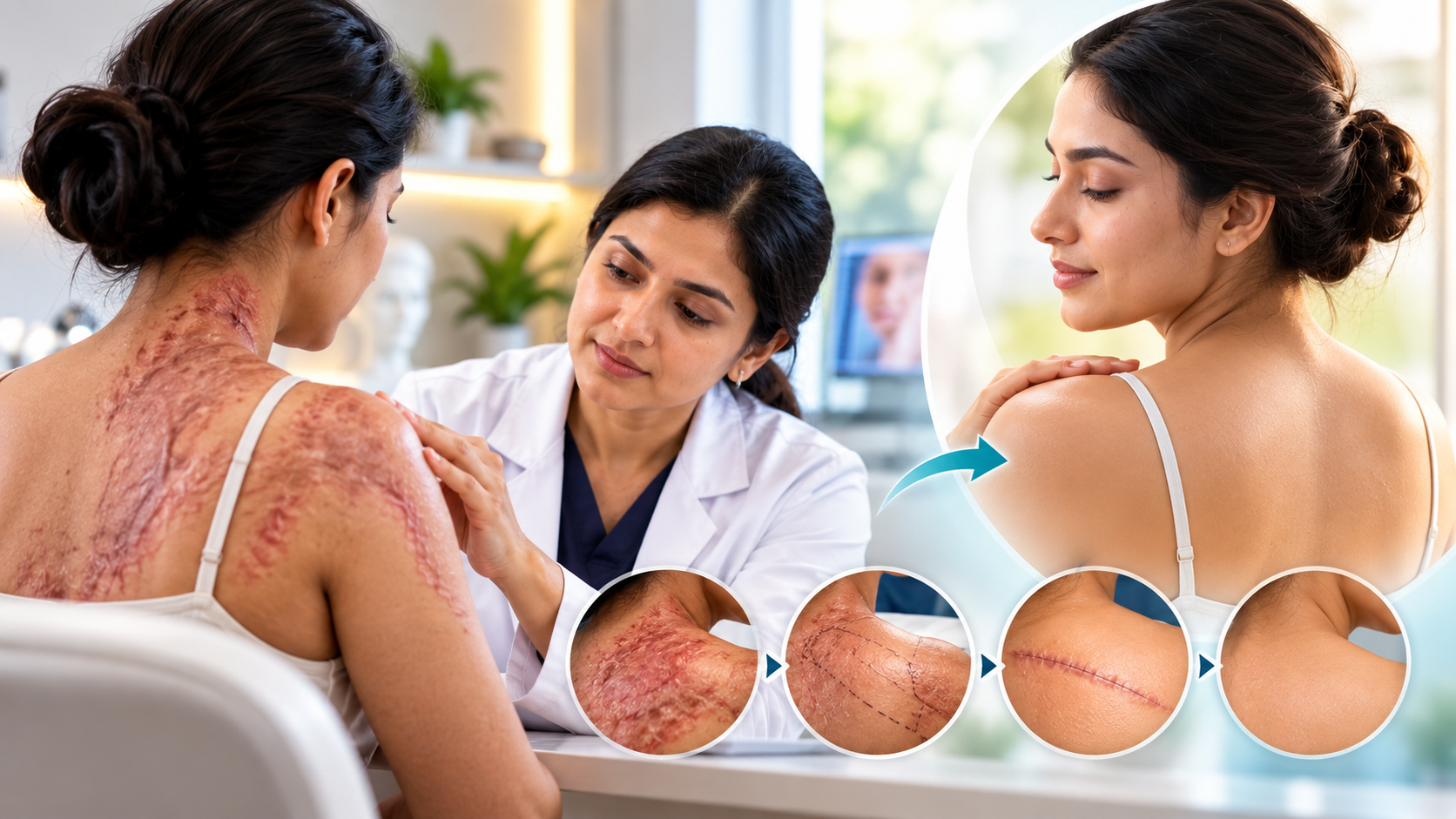
Burn injuries heal, but the journey doesn't end when the wounds close. For many patients in Cuttack and across Odisha, the months and years following a burn bring new challenges: scars that tighten, joints that refuse to move freely, and skin that feels like it no longer belongs to them. Understanding burn scar surgery in Cuttack is the first step toward reclaiming function and confidence. This guide explains what burn scars do, how they are treated, and most importantly when reconstructive surgery becomes the right choice.
Understanding Burn Scars: More Than Skin Deep
A burn scar is not simply a mark on the surface. When the skin is damaged deeply enough, the healing process produces collagen in an abnormal pattern, creating tissue that is thicker, tighter, and less flexible than normal skin.
Two types of scars commonly follow burns:
Hypertrophic scars: Raised, red, and often itchy or painful. They stay within the boundaries of the original burn.
Keloid scars: Thicker, raised growths that extend beyond the original wound area.
The deeper problem, however, is often contracture. As scar tissue matures, it shrinks. When this happens over a joint—a shoulder, elbow, knee, or finger—it pulls the joint into a fixed position and restricts movement. This isn't just a cosmetic concern; it can prevent a person from dressing, eating, walking, or working. Research shows that burn wounds taking longer than 2 to 3 weeks to heal carry a significantly higher risk of developing problematic scars.
The First Line of Defense: Non-Surgical Burn Scar Treatment in Cuttack
Before considering surgery, a comprehensive post burn scar treatment plan focuses on non-surgical strategies. These are not "lesser" options—they are essential, and in many cases, they can prevent the need for surgery altogether.
The Role of Scar Maturation
Burn scars mature over 12 to 18 months, sometimes longer. During this period, the scar is biologically active: inflamed, sensitive, and constantly changing. Surgery performed on an immature scar often leads to worse scarring. This is why patience—combined with aggressive non-surgical management—is critical.
Key Non-Surgical Strategies
Compression Therapy: Custom-fitted pressure garments apply continuous pressure (ideally around 24 mmHg) to the scar. This reduces blood flow to the overactive scar tissue, softening it and limiting its growth. Pressure garments should be worn 23 hours a day, removed only for bathing, until the scar matures.
Silicone Gel and Sheets: Silicone products create a protective barrier that hydrates the scar and regulates collagen production. They are particularly useful for smaller or facial scars.
Massage and Moisturization: Regular scar massage with oil or moisturizer softens the tissue, improves skin pliability, and reduces hypersensitivity.
Splinting: For scars crossing joints, custom splints hold the joint in a stretched position, counteracting the contractile forces of the scar. Splints are often worn at night and during rest periods.
Range of Motion Exercises: Physiotherapy is not optional—it is a cornerstone of burn scar management. Active and passive exercises keep joints mobile and muscles flexible. The movement itself stretches the scar, reducing tightness and preventing contracture.
The Power of Early Intervention
The most effective burn scar treatment in Cuttack is one that begins early. Once wounds have healed, scar management should start immediately—not after contractures have already formed. Delay allows scar tissue to consolidate and tighten, making later treatment more complex.
When Scar Revision Surgery in Cuttack Becomes Necessary
Despite the best non-surgical care, some burn scars require surgical intervention. Burn reconstructive surgery addresses problems that therapy alone cannot solve.
Consider surgery when you notice:
Functional Limitations
A joint that cannot straighten or bend fully (contracture)
Difficulty with daily activities: dressing, eating, walking, or using hands
Neck scars that pull the chin downward or restrict head movement
Persistent Symptoms
Chronic pain, itching, or open wounds in the scar
Ulceration that does not heal
Appearance Concerns Affecting Quality of Life
Disfiguring facial scars
Scars that cause significant psychosocial distress
Growth-Related Issues in Children
Scars that tighten as a child grows, progressively restricting movement
The Right Time for Burn Reconstruction
Timing is a critical surgical decision. As a burn scar specialist in Cuttack, I generally follow these principles:
For function-threatening contractures: Earlier intervention may be necessary, even before full scar maturation. If a joint is locked and therapy cannot restore movement, waiting may cause permanent joint damage.
For cosmetic or non-urgent functional concerns: It is best to wait until the scar has matured, typically 6 to 12 months after healing. Operating on an immature scar risks recurrence and poor outcomes.
Every patient's timeline is unique. The decision to proceed with burn scar surgery in Cuttack must balance the scar's readiness, the patient's goals, and the urgency of the functional deficit.
Burn Contracture Release: Restoring Movement
Burn contracture release is one of the most common and impactful reconstructive procedures. The principle is straightforward: the surgeon cuts through the tight bands of scar tissue that are restricting movement, then covers the resulting defect with healthy skin.
How It Works
Step 1: Release
The surgeon incises the scar contracture, carefully dividing the fibrous bands until the joint can move freely. This may involve simple release or more complex techniques depending on the depth and extent of the contracture.
Step 2: Reconstruction
The open area created by the release must be covered. Options include:
Skin grafts: Thin sheets of skin harvested from a donor site (often the thigh) and applied to the defect. Grafts are reliable but may contract over time.
Local flaps: Tissue borrowed from adjacent areas, often with its own blood supply, providing better texture and less secondary contraction.
Dermal substitutes: Bioengineered matrices that provide a scaffold for new skin growth, improving pliability and reducing recurrence.
Step 3: Rehabilitation
Surgery is only the beginning. Post-operative splinting and physiotherapy are essential to maintain the gains achieved in the operating room. Without proper rehabilitation, contractures can recur.
Beyond Simple Release: Advanced Burn Reconstructive Surgery
Complex burn scars particularly those involving the face, hands, or extensive body areas may require advanced techniques.
Tissue Expansion: A silicone balloon is placed under healthy skin near the scar. Over weeks, the balloon is gradually inflated, causing the skin to grow. This newly expanded skin is then used to resurface the scarred area, providing color and texture that match the surrounding skin far better than a graft.
Microvascular Free Flaps: For severe contractures, especially in the neck or around joints, tissue can be transferred from one part of the body to another along with its blood vessels. These vessels are reconnected under the microscope, ensuring the transferred tissue survives. This is one of the most sophisticated tools in reconstructive surgery for burn scars.
Scar Revision Techniques: Not all scars need release. Sometimes, burn scar revision focuses on improving the scar's appearance. Techniques include:
Z-plasty: A surgical technique that reorients the scar, breaking up a straight tight line into a zigzag, which relieves tension and improves appearance.
Scar excision: Direct removal of a problematic scar with careful closure.
Laser therapy: Fractional lasers can resurface scars, improving texture, color, and pliability.
Life After Burn Reconstruction
Recovery from burn reconstruction is a process, not an event. Patients should expect:
Initial immobilization: Splints and dressings protect the surgical site.
Gradual mobilization: Physiotherapy begins as healing progresses.
Ongoing scar care: Compression, massage, and silicone continue for months.
Scar maturation: The final result continues to improve for 12 to 18 months after surgery.
It is important to have realistic expectations. As one clinical guideline puts it plainly: "Once a scar is always a scar. We can minimize the burn scar but it may not be possible to remove it completely". The goal of burn reconstruction is not perfect skin—it is improved function, reduced pain, and a better quality of life.
Frequently Asked Questions
Q1: Can burn scars be treated without surgery?
Ans :- Yes. Compression, silicone, massage, splinting, and physiotherapy can manage many scars. Surgery is reserved for contractures, functional limitations, or scars that do not respond to conservative care.
Q2: How long after a burn should I wait for reconstructive surgery?
Ans :- For cosmetic concerns, waiting 6–12 months for scar maturation is ideal. For function-threatening contractures, earlier surgery may be necessary.
Q3: Is burn reconstruction painful?
Ans :- The surgery itself is performed under anesthesia. Post-operative discomfort is managed with medication. The rehabilitation process may involve some discomfort, but this is temporary and necessary for optimal results.
Q4: Will my burn scar come back after surgery?
Ans :- Scars can recur, especially if surgery is performed before maturation or if post-operative rehabilitation is inadequate. Following your surgeon's instructions for splinting, compression, and exercises is essential.
Q5: Does insurance cover burn reconstruction?
Ans :- In India, reconstructive procedures for functional impairment are often covered by insurance, while purely cosmetic scar revisions may not be. This depends on your policy and the specific indication.
Conclusion
Burn scars do not have to define your life. Whether you are dealing with a recent burn or a scar that has troubled you for years, effective burn scar surgery in Cuttack is available. The decision to pursue reconstructive surgery is significant. It requires a thorough evaluation, an honest discussion of risks and benefits, and a commitment to the rehabilitation that follows. If you are experiencing restricted movement, chronic pain, or significant distress from a burn scar, a consultation with a burn scar specialist can provide clarity.